

Coin Grading - Grading Mintstate Coins
For most people, Mintstate coins are more difficult to grade than are circulated coins. First, a Mintstate coin must show absolutely no signs of wear, and therefore, the grader must be able to distinguish between marks, scrapes and rubs caused by the minting and distribution process, and wear caused by circulation.
A Mintstate coin's grade is determined by evaluating the quality
of its lustre, the condition of its surfaces and the fullness of
its strike.
It is important to understand that it is the inter-relationship
between these three factors that determines the grade, and that
if any one of these factors is of truly exceptional quality, it
can compensate for a deficiency in the quality of any of the other
factors. It is fundamental that a grader cannot properly grade a
Mintstate coin without knowing the typical qualities for each of
the factors of lustre, surfaces, and strike for that particular
type of coin. These typical qualities vary not only from coin type
to coin type, but from country to country, so a grader who is expert
with the coins of one type or country may be far from accurate with
the coins of another.
The qualities of the strike, the lustre and the surfaces of a Mintstate coin are dependent in large measure on the metal from which it was made. The relative hardness of the various coinage metals and the differing ways they respond to being struck between a pair of dies needs to be understood by the grader. Also, a knowledge of the difference in the damage each metal will show when as coins they are banged together, helps the grader assess surface contact marks. Gold coins, which are relatively soft and heavy, usually show full strikes, but their surfaces damage easily. Nickel, on the other hand, is very hard and its coins often display weak strikes, but very minor surface contact marks.
The normal production of coins is on high speed presses, using mass produced blanks. After striking, the coins are run down chutes, through counting machines, and dumped into bins and bags with other coins. In effect, they are manufactured with little or no thought of being collected. The resulting coins will, with almost no exception, have surface contact marks that show evidence of much jostling on their way toward entering circulation. The size of the coin and the metal from which it is made will be major factors in the number of such marks.
For Mintstate coins, the Certification Services generally use only ten of the grades, reserving the eleventh, MS-70, almost as an unattainable perfection. Raw coins are generally seen in only three of these grades: Typical Mintstate, MS-60 (often called Brilliant Uncirculated), Choice Mintstate, MS-63, and Gem Mintstate, MS-65. The full range of Mintstate grades is:
MS-70 Perfect Mintstate (Theoretical perfection - and therefore
not used)
MS-69 Superb Mintstate
MS-68 Superb Mintstate
MS-67 Superb Mintstate
MS-66 Gem Mintstate
MS-65 Gem Mintstate
MS-64 Very Choice Mintstate
MS-63 Choice Mintstate
MS-62 Select Mintstate
MS-61 Typical Mintstate
MS-60 Typical Mintstate (Uncirculated or Brilliant Uncirculated
- Unc. or BU)
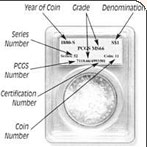
Mintstate Grades
These five grades are the bench marks between which the other
mintstate grades are interpolated. For example, MS-64 is the
grade given to a coin that is better than MS-63 but does not
quite have the requisites for MS-65.
Perfect Mintstate (MS-70) MS-70 is a theoretical perfection. To achieve such a grade, the planchet will have to have been perfectly formed, and have flawless, lint-free surfaces. The dies will have to have been in new condition and raised from unworn masters, and the dies will have had no lint, dust, oil or other contaminants on their surfaces. The coining press will have been perfectly adjusted to give a full strike to the coin, which will then have received no marks upon being ejected from the press, nor in its slide down the chutes and sorting tables/grids and into a receiving bin. Nor will it have been marred by all the other coins following it into the bin, nor from the dumping and counting into bags for distribution. Such a coin is not possible. We are dealing here with an automated process that manufactures "Business Strikes" intended for daily commerce.
Perfect Specimen, Perfect Proof (SP-70, PF-70) Although rarely seen, these are attainable grades, since Specimens and Proofs are generally double struck on specially prepared, polished blanks using specially prepared dies on a slow, high pressure press, and the pieces are immediately hand picked off the press with gloved hands and carefully placed in protective holders.
Superb Mintstate (MS-67) Pieces of this quality will
immediately catch the experienced eye and will appear as perfect
coins to most other graders. They are distinguished by their
full (or very nearly full) strike, superb, virtually flawless
surfaces and superb lustre. If there are any shortcomings
or detractions, they are not initially obvious, but will be
discovered only after extensive study under magnification.
These are exceptional pieces, rarely seen.


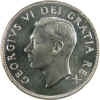

Gem Mintstate (MS-65) There is a definite look of
quality to an MS-65 coin that easily distinguishes it from
lower grades of Mintstate. On initial examination, with the
naked eye, the piece will appear nearly perfect. A more detailed
examination will uncover minor flaws. The strike will be no
less than that typically seen for the series, and the surfaces
will have only slight marks that will not distract from the
overall appeal of the coin. The lustre will normally be better
than that usually seen on Mintstate coins of its type. It
is not unusual that one of these factors will be well above
the required level and will compensate for another factor
which is a bit below standard. Virtually flawless surfaces
may, for example make up for subdued lustre or a slightly
weak strike.
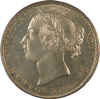


Choice Mintstate (MS-63) Generally speaking, this
can be thought of as a nice example of Mintstate coin which
does not meet the exacting quality requirements of a Gem Mintstate
coin. An MS-63 coin will be an attractive and quite typical
example of a "new" coin of its type with a strike
that is typical for the series. There will be a number of
surface marks, but not too many, too large nor too awkwardly
placed so as to be a distraction. And, while the lustre is
usually attractive, it may be somewhat subdued or there may
be some dull areas. Frequently, an MS-63 coin is an MS-65
coin that has a slight deficiency such as one too many hits.
Also very often, one of the grading factors will be of a high
quality not normally seen at this grade and will compensate
for a weaker factor, such as superb lustre balancing a weak
strike, or diminished lustre being propped-up by near flawless
surfaces.
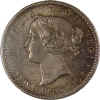

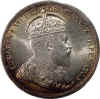


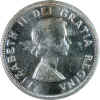
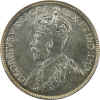
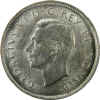
Typical Mintstate (MS-60) The surfaces of an MS-60
coin will often have what is often described as a "baggy"
look, with a numerous "bag marks" or "hits"
of varying sizes depending on the hardness of the metal. And,
while it is usual to expect an MS-60 to look a bit beat-up,
if any of the hits are abnormally large or deep, they need
to be described separately. The strike may be soft or weak,
and the lustre may be impaired by a dullness from over dipping
and be much less than expected on a new coin of its type.
There is, however, no wear on the surfaces of the coin.


NEXT: Go to Grading Circulated Coins Page
This material is being used under license from the Canadian Coinoisseur, inc.